
Lecturette Topics Notes
E- GOVERNANCE
1️⃣ Introduction E-Governance refers to the use of Information and Communication Technology (ICT) by the government to provide services, share information, and interact with

1️⃣ Introduction E-Governance refers to the use of Information and Communication Technology (ICT) by the government to provide services, share information, and interact with
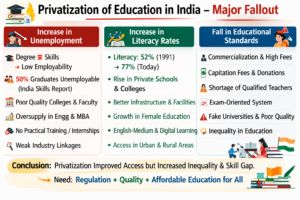
India has seen privatization of education in a big way in recent decades. What do you think has been the major fallout of this? (a)
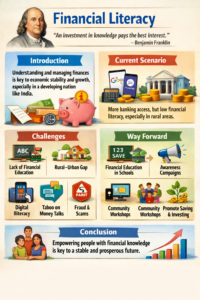
Introduction Financial literacy refers to the ability to understand and effectively use financial skills such as budgeting, saving, investing, and managing debt. In the modern
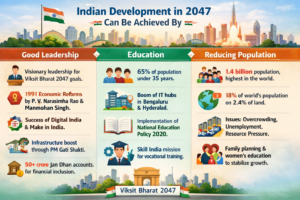
Indian development in 2047 can be achieved by 1- Good Leadership 2- Education 3- Reducing Population Good Leadership 1. Visionary leadership helps in creating long-term

India–Japan Cooperation for Sustainable Development Goals (SDGs) – Phase II Key Points: 1. NITI Aayog and Japan International Cooperation Agency signed the Record of Discussions (RoD) for the Japan–India SDG Cooperation
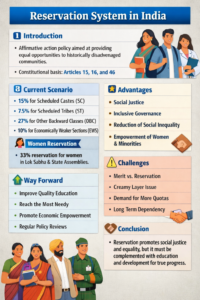
1️⃣ Introduction The reservation system in India is a policy of affirmative action designed to provide equal opportunities to historically disadvantaged communities. It aims to address centuries of social

Introduction Digital education refers to the integration of technology, internet platforms, and digital tools into the teaching–learning process. In today’s rapidly changing world, education is
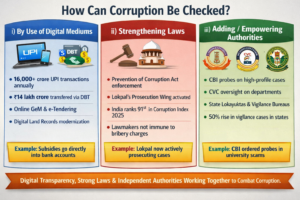
How can corruption be checked? –: i) by use of digital mediums ii) strengthen laws iii) adding more authorities Corruption weakens democracy, slows economic growth,
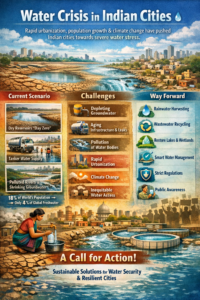
Introduction🌿 Water is the foundation of life, economic growth, and public health. However, rapid urbanization, population growth, and climate change have pushed many Indian cities