Introduction
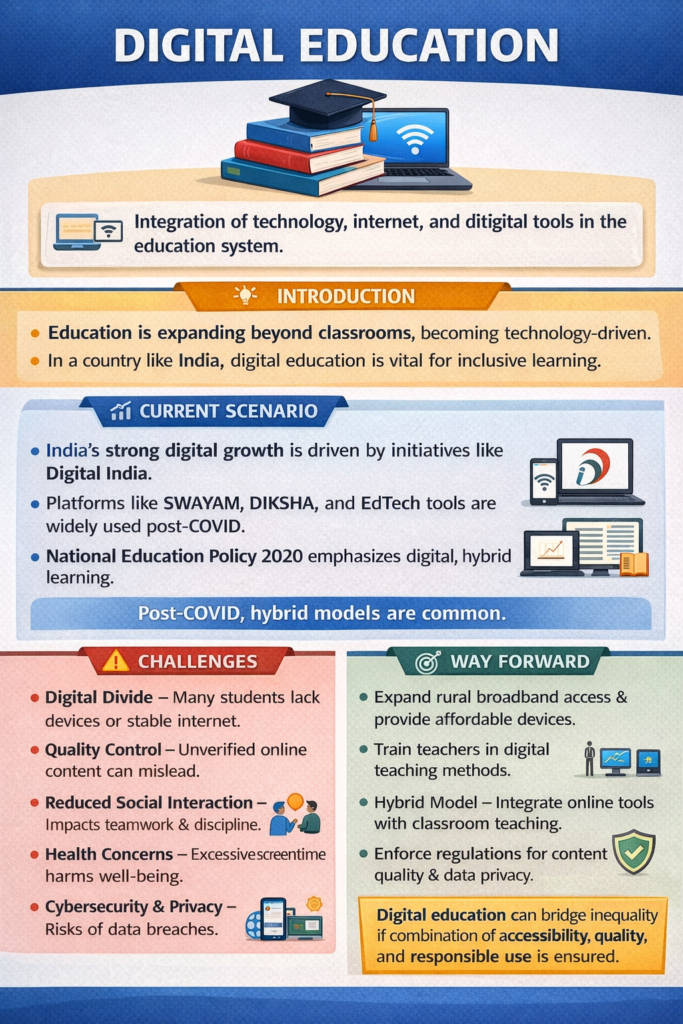
Digital education refers to the integration of technology, internet platforms, and digital tools into the teaching–learning process. In today’s rapidly changing world, education is no longer confined to classrooms. It has expanded beyond physical boundaries and is becoming more technology-driven.
In a developing country like India, digital education is not just an innovation but a necessity to ensure inclusive and equitable learning opportunities.
Current Scenario
India is witnessing rapid digital growth. With increasing internet penetration and smartphone usage, online education platforms have expanded significantly.
Under initiatives like Digital India, the government aims to improve digital infrastructure. Platforms such as SWAYAM provide free online courses, while DIKSHA supports school education with e-content in regional languages. The National Education Policy 2020 also emphasizes digital learning, virtual labs, and online skill development.
Post-COVID, hybrid education models are becoming common. Competitive exam aspirants, including defence aspirants, heavily rely on digital platforms for preparation.
Challenges
Despite progress, digital education faces serious challenges:
1. Digital Divide – Rural and economically weaker sections still lack devices and stable internet.
2. Quality Control – Not all online content is verified or standardized.
3. Reduced Social Interaction – Physical classrooms help in personality development, teamwork, and discipline — which online systems may lack.
4. Health Concerns – Excessive screen time affects physical and mental well-being.
5. Cybersecurity & Data Privacy Issues – Protection of student data is crucial.
For a country like India, access and equity remain the biggest obstacles.
Way Forward
To make digital education effective:
• Strengthen rural broadband infrastructure.
• Provide affordable devices to students from weaker sections.
• Train teachers in digital pedagogy.
• Promote a hybrid model combining classroom discipline with digital flexibility.
• Introduce strong regulations to ensure content quality and data protection.
Digital education should complement traditional learning, not replace it.