Introduction
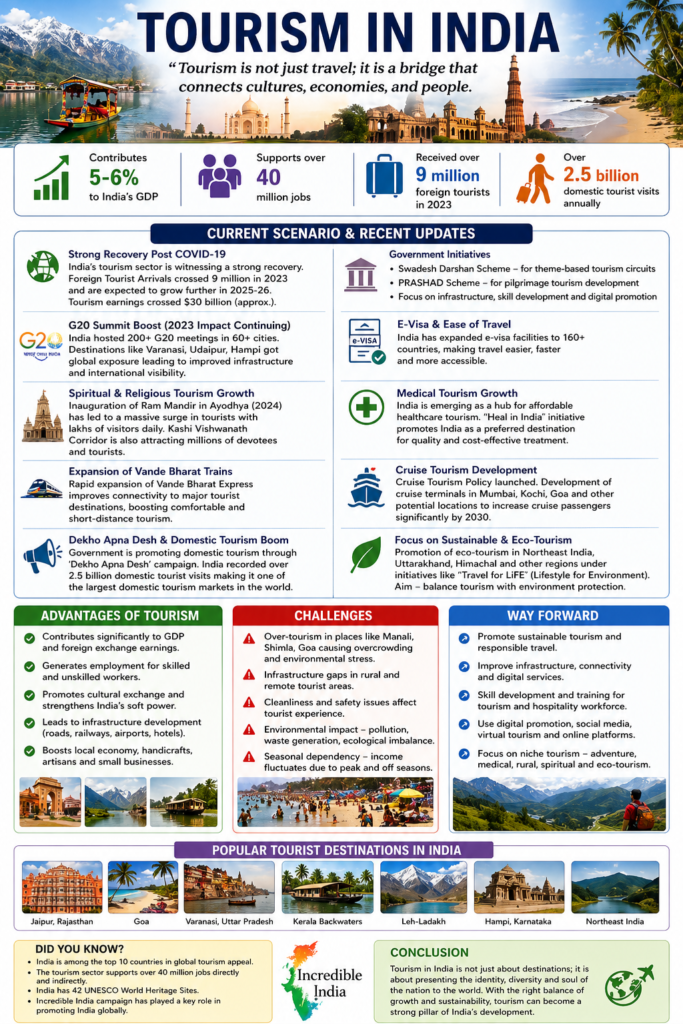
“Tourism is not just travel; it is a bridge that connects cultures, economies, and people.”
India, with its rich heritage, diverse geography, and vibrant culture, is one of the most attractive tourist destinations in the world. From the Himalayas to coastal beaches, from historical monuments to spiritual centers, India offers a unique experience to every traveler.
- Tourism contributes around 5–6% to India’s GDP
- It supports over 40 million jobs
- India is among the top emerging global tourism destinations
Current Scenario (With Recent Updates)
Tourism in India is witnessing a strong revival and expansion after COVID-19.
- India received over 9 million foreign tourists in 2023, and the numbers are steadily increasing
- Domestic tourism is booming with over 2.5 billion visits annually, making India one of the largest domestic tourism markets
Recent Developments Integrated
- The G20 Summit (2023) was hosted across 60+ cities, giving global exposure to destinations like Varanasi, Udaipur, and Hampi, and improving infrastructure
- The inauguration of the Ram Mandir in Ayodhya (2024) has led to a massive surge in religious tourism, with lakhs of visitors daily
- Expansion of Vande Bharat trains has improved connectivity to major tourist destinations
- Government initiatives like:
- Dekho Apna Desh Campaign (promoting domestic tourism)
- Swadesh Darshan Scheme (theme-based circuits)
- PRASHAD Scheme (pilgrimage tourism)
- India has expanded e-visa facilities to 160+ countries, making travel easier
- Growth in medical tourism through initiatives like “Heal in India”
- Development of cruise tourism in cities like Mumbai and Kochi
- Focus on eco-tourism and sustainable tourism under initiatives like “Travel for LiFE”
Advantages of Tourism
1. Economic Growth
- Tourism contributes significantly to GDP and foreign exchange earnings
- Generated over $30 billion in revenue
2. Employment Generation
- Provides jobs in hotels, transport, guides, handicrafts
- Supports both skilled and unskilled workforce
3. Cultural Exchange
- Promotes India’s heritage, traditions, and diversity globally
- Strengthens India’s soft power
4. Infrastructure Development
- Development of roads, airports, railways due to tourism demand
- Example: Infrastructure boost during G20 events
5. Boost to Local Economy
- Encourages local businesses, artisans, and small vendors
Challenges
1. Over-tourism
- Destinations like Manali, Shimla, Goa face overcrowding and environmental stress
2. Infrastructure Gaps
- Rural and remote tourist areas still lack proper facilities
3. Cleanliness and Safety Issues
- Sanitation and safety concerns affect tourist experience
4. Environmental Impact
- Pollution, waste generation, ecological imbalance
5. Seasonal Dependency
- Tourism income fluctuates due to peak and off seasons
Way Forward
1. Promote Sustainable Tourism
- Eco-friendly practices and responsible travel
2. Improve Infrastructure
- Better connectivity, digital services, and facilities
3. Skill Development
- Training for tourism and hospitality workforce
4. Digital Promotion
- Use of social media, virtual tourism, and online platforms
5. Focus on Niche Tourism
- Adventure, medical, rural, and spiritual tourism