
Introduction
Mental health refers to a state of well-being in which an individual realizes their abilities, can cope with normal stresses of life, works productively, and contributes to society. It is an integral component of overall health and directly influences individual efficiency, social harmony, and national productivity. In recent years, mental health has emerged as a critical public health concern, especially among youth.
Current Scenario
Globally, mental health disorders account for a significant share of the disease burden. According to the World Health Organization, nearly one in eight individuals suffers from some form of mental disorder.
In India, the situation is equally concerning:
• The National Mental Health Survey indicates that a substantial proportion of the population experiences mental health issues during their lifetime.
• Rising cases of depression, anxiety, and substance abuse are observed, particularly among students, working professionals, and farmers.
• Suicide remains a major concern, with India contributing significantly to global suicide numbers.
Rapid urbanization, competitive environments, digital exposure, and post-pandemic stress have further aggravated the situation.
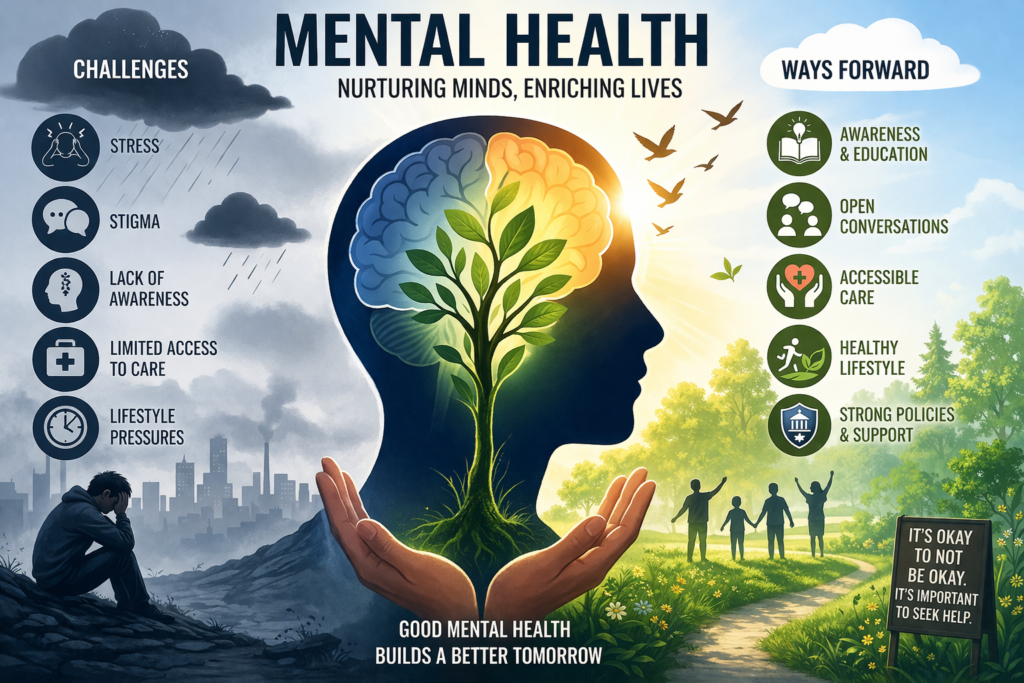
Challenges
1. Stigma and Social Attitudes
Mental health issues are often misunderstood and associated with social stigma, discouraging individuals from seeking help.
2. Inadequate Infrastructure
There is a severe shortage of trained mental health professionals and limited institutional support, especially in rural areas.
3. Lack of Awareness
Early symptoms often go unrecognized, leading to delayed diagnosis and treatment.
4. Economic and Social Pressures
Unemployment, academic pressure, and financial instability contribute significantly to mental stress.
5. Policy Implementation Gaps
Despite existing programs, effective implementation and outreach remain limited.
Way Forward
1. Awareness and Sensitization
Integrating mental health education into school and college curricula to promote early understanding.
2. Strengthening Healthcare Systems
Expanding mental health services, increasing the number of trained professionals, and improving accessibility in rural areas.
3. Community-Based Interventions
Encouraging local support systems, self-help groups, and community counseling initiatives.
4. Leveraging Technology
Promoting tele-mental health services and digital platforms for wider outreach.
5. Workplace and Institutional Reforms
Creating supportive environments with counseling facilities and stress management programs.
6. Policy and Governance
Effective implementation of the Mental Healthcare Act, 2017, and strengthening national programs.