What is the main reason for stress/mental instability in youth
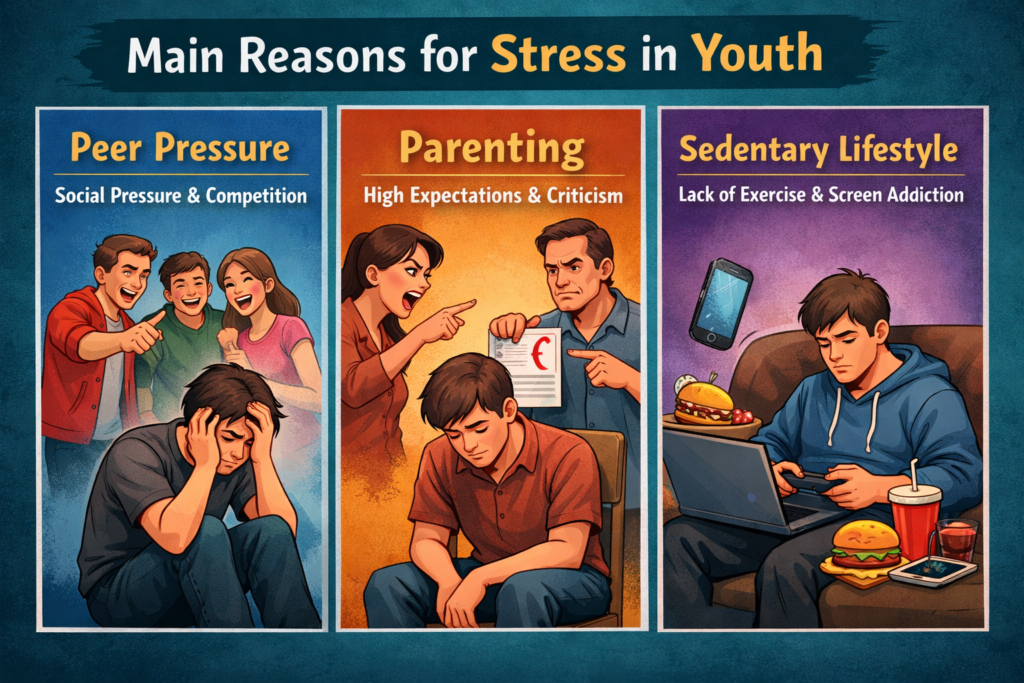
1- Peer Pressure
2- Parenting
3- Sedentary Life style
1. Peer Pressure
Points
• Youth often compare themselves with friends in academics, career choices, appearance, and social status.
• The desire to fit into a social group creates fear of rejection and anxiety.
• Social media has increased comparison and competition among young people.
Data / Facts
• According to the World Health Organization, 1 in 7 adolescents (10–19 years) globally experiences mental health disorders.
• Studies show that a large number of teenagers feel pressure to perform academically and socially like their peers.
Examples
• Students choosing careers such as engineering or medicine because their friends are pursuing them.
• Pressure to maintain a certain lifestyle or popularity on social media platforms.
• Bullying or exclusion in schools leading to stress and low confidence.
2. Parenting
Points
• High parental expectations regarding marks, career, and success create pressure on youth.
• Lack of emotional support and communication can lead to frustration and loneliness.
• Constant comparison with relatives or neighbors increases stress.
Data / Facts
• According to the National Crime Records Bureau, over 13,000 student suicides were recorded in India in 2022, many linked to academic pressure and family expectations.
Examples
• Parents forcing children to pursue certain careers despite different interests.
• Excessive focus on marks in competitive exams like engineering or medical entrance tests.
• Children feeling guilty or depressed when they fail to meet family expectations.
3. Sedentary Lifestyle
Points
• Increasing screen time due to smartphones, online classes, and gaming reduces physical activity.
• Lack of exercise affects both physical health and emotional stability.
• Poor sleep patterns and reduced outdoor activities contribute to stress and anxiety.
Data / Facts
• According to the World Health Organization, more than 80% of adolescents worldwide do not get sufficient physical activity.
Examples
• Youth spending several hours on social media or video games instead of playing sports.
• Reduced participation in outdoor activities and physical exercise.
• Increased stress, obesity, and mental fatigue due to prolonged screen time.