Impact of social media on mental health:
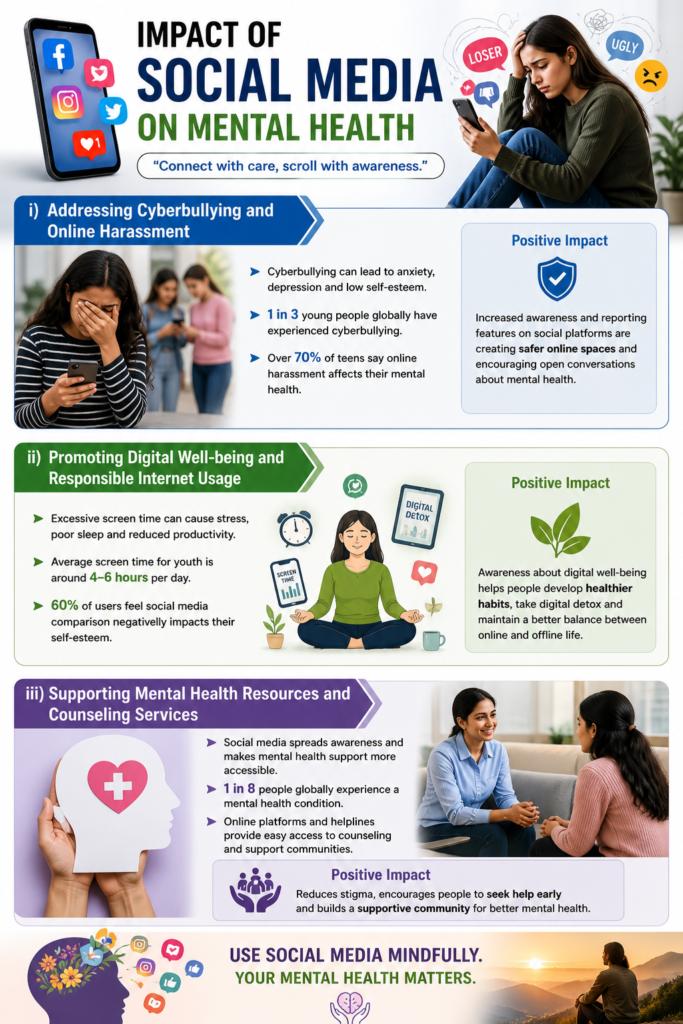
i) Addressing Cyberbullying and Online Harassment.
ii) Promoting Digital Well-being and Responsible Internet Usage.
iii) Supporting Mental Health Resources and Counseling Services.
#GD@r2rssb
(i) Addressing Cyberbullying and Online Harassment
Social media has increased connectivity, but it has also led to a rise in cyberbullying, trolling, and online harassment, especially among youth.
Facts & Data:
According to global surveys, 1 in 3 young people report experiencing cyberbullying.
In India, studies suggest that around 20–30% of adolescents have faced some form of online harassment.
A UNICEF report highlighted that over 70% of young people globally have encountered online hate or harmful content.
Impact on Mental Health:
Leads to anxiety, depression, low self-esteem, and social withdrawal
In severe cases, linked with self-harm and suicidal tendencies
Positive Role:
Social media platforms are now introducing:
Reporting tools and content moderation systems
AI-based filters to detect abusive content
Campaigns like #StopCyberbullying promote awareness
👉 Societal Impact:
Encourages discussions on online safety and mental health awareness
Pushes governments and platforms to create safer digital environments
(ii) Promoting Digital Well-being and Responsible Internet Usage
Excessive use of social media leads to addiction, sleep disturbance, and reduced productivity.
Facts & Data:
Average screen time in India is around 5–7 hours per day among youth
WHO and other studies link excessive screen time with higher risk of anxiety and depression
Around 60% of users report feeling stressed due to social media comparison and pressure
Impact on Mental Health:
Creates fear of missing out (FOMO)
Leads to low self-worth due to comparison culture
Affects sleep cycle and concentration
Positive Role:
Platforms now provide:
Screen time tracking tools
“Take a break” reminders
Awareness campaigns promote:
Digital detox
Balanced usage habits
👉 Societal Impact:
Promotes responsible internet behavior
Encourages healthier lifestyle choices
(iii) Supporting Mental Health Resources and Counseling Services
Social media has become a powerful platform for mental health awareness and support systems.
Facts & Data:
WHO states that 1 in 8 people globally suffer from mental health disorders
In India, around 14% of the population experiences mental health issues (National Mental Health Survey)
Online platforms have increased access to:
Helplines
Counseling services
Mental health communities
Examples:
Campaigns like:
#MentalHealthAwareness
#ItsOkayToNotBeOkay
Apps and platforms offering:
Online therapy
Emotional support groups
Impact:
Reduces stigma around mental health
Makes help more accessible, especially in rural or remote areas
👉 Societal Impact:
Encourages people to seek help early
Builds a supportive and aware community