Introduction
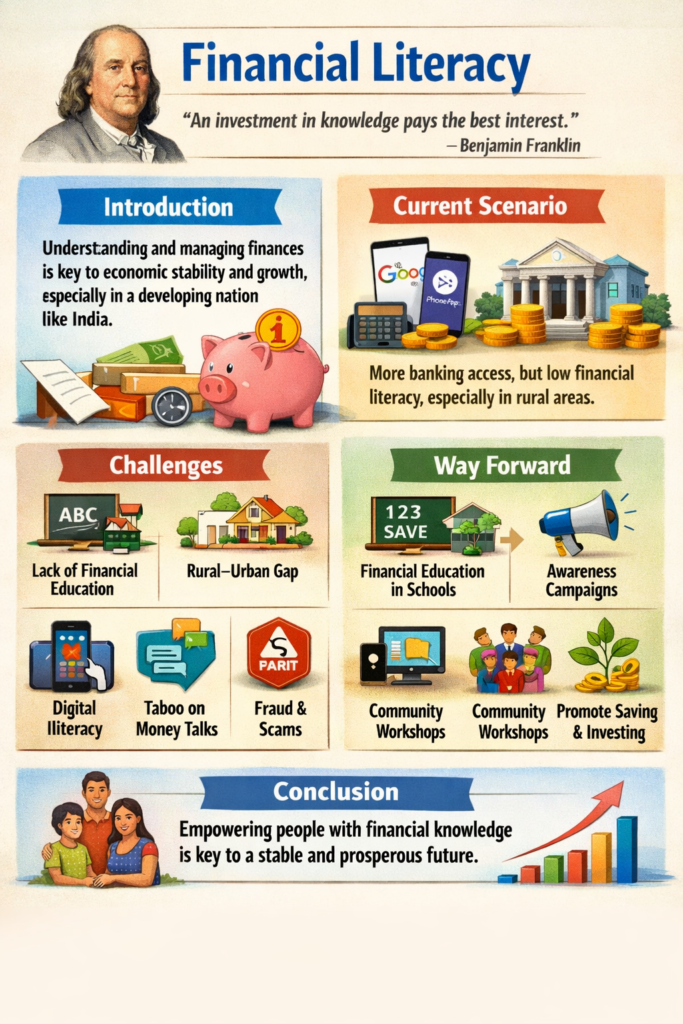
Financial literacy refers to the ability to understand and effectively use financial skills such as budgeting, saving, investing, and managing debt. In the modern world, where economic decisions influence personal and national growth, financial literacy has become an essential life skill. It empowers individuals to make informed financial decisions, avoid unnecessary debt, and plan for a secure future. For a developing country like India, improving financial literacy is crucial for inclusive growth and economic stability.
Current Scenario
In recent years, financial awareness in India has improved due to digital banking and government initiatives. Programs such as Pradhan Mantri Jan Dhan Yojana have expanded access to banking services for millions of people. Similarly, digital payment platforms like Google Pay and PhonePe have encouraged cashless transactions and introduced people to modern financial systems.
However, despite these advancements, financial literacy levels in India remain relatively low, especially in rural areas. Many people still lack knowledge about basic financial concepts such as interest rates, insurance, investments, and retirement planning. According to various surveys, a large section of the population relies on informal financial sources or falls victim to financial fraud due to a lack of awareness.
Challenges
Several challenges hinder the spread of financial literacy in society.
1. Lack of financial education: Financial management is rarely taught in schools or colleges, leaving many individuals unprepared to manage money effectively.
2. Rural–urban gap: People in rural areas often have limited access to financial institutions and digital infrastructure.
3. Digital illiteracy: Although digital banking is increasing, many people do not know how to safely use online financial services.
4. Cultural attitudes toward money: In many families, financial discussions are avoided, preventing young people from learning practical money management skills.
5. Financial fraud and misinformation: Lack of awareness makes individuals vulnerable to scams, Ponzi schemes, and misleading investment opportunities.
Way Forward
To improve financial literacy, a multi-dimensional approach is required.
1. Financial education in schools: Basic financial concepts such as saving, budgeting, and investing should be included in school curricula.
2. Government awareness programs: Large-scale awareness campaigns can help educate citizens about banking services, insurance, and responsible borrowing.
3. Digital literacy training: As digital payments grow, people must be trained to use online platforms safely and responsibly.
4. Community-based learning: NGOs and local institutions can conduct workshops in villages to spread financial awareness.
5. Encouraging responsible financial habits: Individuals should be encouraged to save regularly, avoid unnecessary debt, and invest wisely for long-term security.
Conclusion
Financial literacy is not merely about managing money; it is about empowering individuals to achieve economic independence and stability. A financially aware population contributes to stronger households, a resilient economy, and sustainable national development. Therefore, promoting financial literacy should be a priority for governments, institutions, and individuals alike.