How can corruption be checked? –:
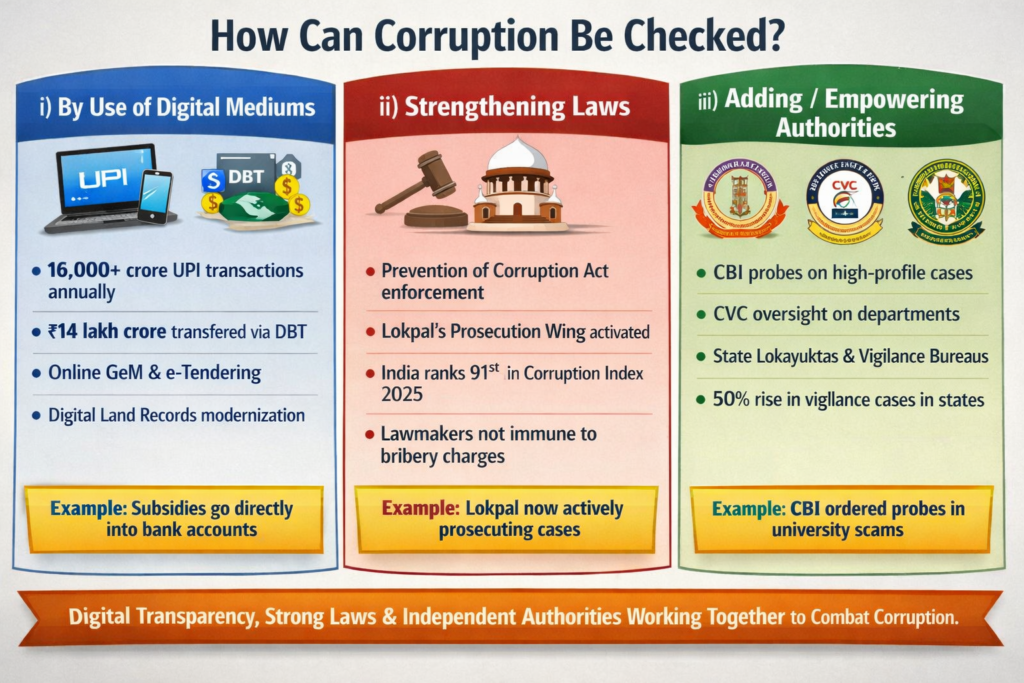
i) by use of digital mediums
ii) strengthen laws
iii) adding more
authorities
Corruption weakens democracy, slows economic growth, and reduces public trust in institutions. In a developing country like India, controlling corruption is essential for transparent governance and inclusive development. It can be effectively checked through digital mediums, strengthening laws, and adding accountable authorities.
i) By Use of Digital Mediums
Digitalization reduces human interface, which directly cuts down opportunities for bribery and manipulation.
• E-Governance: Platforms like Digital India promote online delivery of services, reducing middlemen.
• Direct Benefit Transfer (DBT): Subsidies are transferred directly to beneficiaries’ bank accounts, minimizing leakage.
• Online Tendering & E-Procurement: Transparent bidding systems reduce favoritism and manipulation.
• UPI & Digital Payments: Digital transactions create traceable records, reducing black money circulation.
• RTI Online Portals: Improve transparency and citizen access to information.
Digital tools increase transparency, accountability, and traceability in governance.
ii) Strengthening Laws
Strong laws with strict enforcement act as a deterrent.
• Prevention of Corruption Act, 1988 criminalizes bribery and abuse of public office.
• Lokpal and Lokayuktas Act, 2013 provides for an independent anti-corruption ombudsman.
• Fast-track courts can ensure timely justice.
• Whistleblower protection laws encourage citizens to report corruption without fear.
• Strict punishment and confiscation of illegal assets create fear among offenders.
However, laws are effective only when implemented honestly and efficiently.
iii) Adding More Authorities
Creating independent and empowered institutions strengthens oversight mechanisms.
• Central Vigilance Commission supervises vigilance administration.
• Central Bureau of Investigation investigates major corruption cases.
• Independent audit bodies like Comptroller and Auditor General of India ensure financial accountability.
• Internal vigilance departments in ministries and public sector units enhance monitoring.
However, simply adding more authorities is not enough; they must be autonomous, well-resourced, and free from political interference.
Conclusion🧠
Corruption can be effectively checked through a combination of technology, strong legal frameworks, and empowered institutions. Digital governance increases transparency, strong laws create deterrence, and independent authorities ensure accountability. Along with these measures, ethical education and citizen awareness are equally important.
Ultimately, corruption control is not only the responsibility of the government but also of society as a whole.