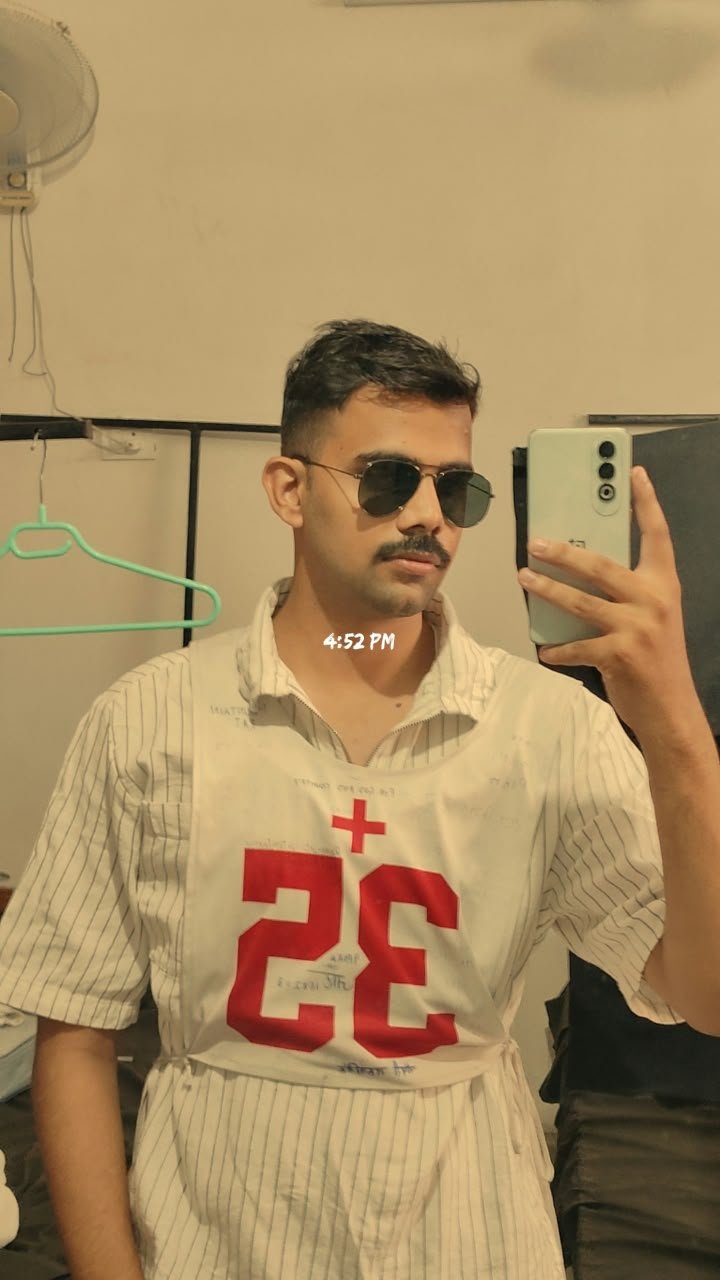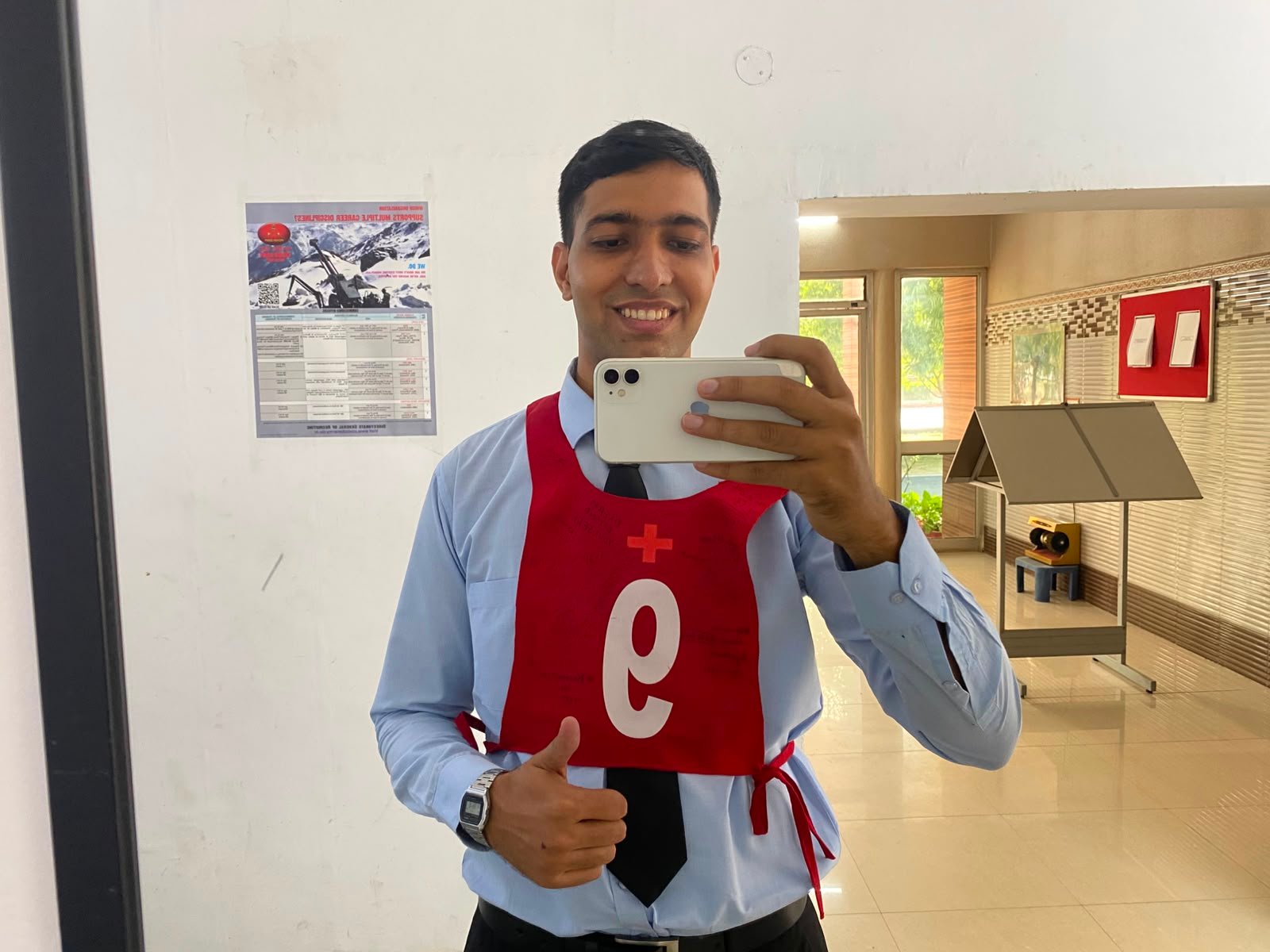
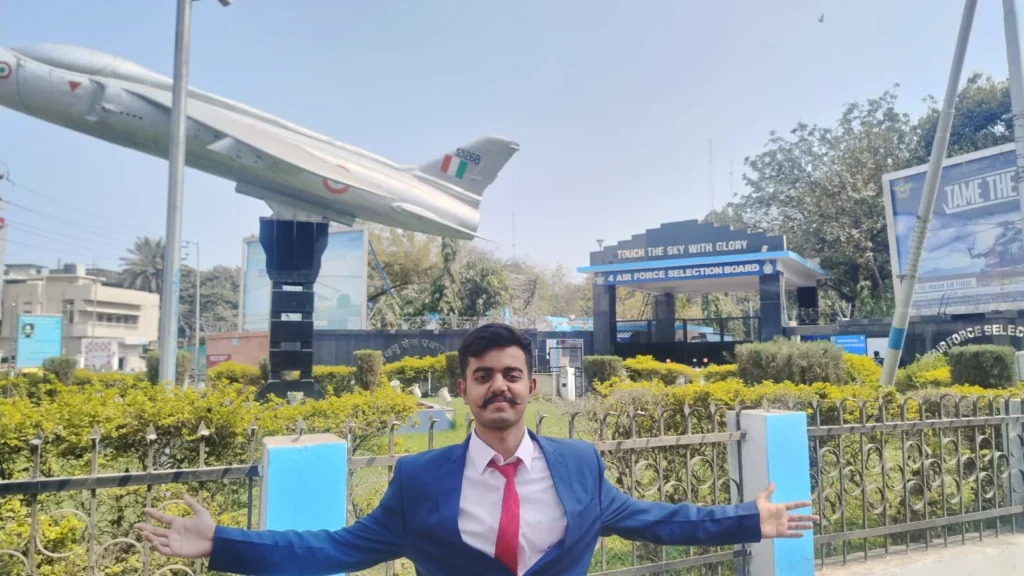
Every SSB aspirant remembers the moment their journey began.
For some, it’s a family tradition.
For others, it’s a chance encounter with someone in uniform.
For Priyanshu Sinha, it started with a movie.
A movie that sparked a curiosity which eventually became a dream.
Years later, after multiple attempts, setbacks, self-doubt, and countless lessons, that dream finally led to a recommendation through AFCAT 2 2025.
But the most important part of his story isn’t the recommendation.
It’s how he learned to understand himself along the way.
The Spark That Started Everything
Priyanshu belongs to Nawada, Bihar. He completed his schooling in Ranchi and later pursued a Bachelor’s degree in Psychology from Banaras Hindu University.
Unlike many candidates who grow up around the Armed Forces, Priyanshu’s journey began with inspiration from cinema.
After watching Lakshya, he became fascinated by the idea of military life.
What began as admiration soon turned into curiosity.
He started researching the NDA.
That research led him deeper into the world of the Armed Forces.
And before long, he knew this was the path he wanted to pursue.
The Problem He Couldn’t Identify
Many aspirants struggle with Psychology because they don’t know what to write.
Priyanshu’s challenge was different.
He didn’t know how to understand himself.
For a long time, his stories followed the same pattern.
The same structure.
The same approach.
The same template repeated in different situations.
The responses were technically complete.
But they lacked depth.
They lacked individuality.
Most importantly, they lacked self-awareness.
And without self-awareness, it’s difficult to create responses that genuinely reflect your personality.
Learning the Art of Self-Introspection
One of the biggest turning points in Priyanshu’s journey came when he began focusing on introspection.
Not surface-level reflection.
Real introspection.
The kind that forces you to examine your strengths, weaknesses, habits, reactions, and motivations honestly.
Through structured self-analysis, he gradually learned how to understand himself better.
The more he reflected, the easier it became to write meaningful stories.
Instead of creating ideal characters, he began drawing from genuine experiences, values, and thought processes.
His stories stopped sounding manufactured.
They started sounding real.
And that made a significant difference.
Psychology: The Battle He Had to Win
Psychology remained one of the most challenging aspects of the SSB for him.
Time management was a constant struggle.
His stories often lacked impact.
The Situation Reaction Test (SRT) felt difficult.
Like many aspirants, he sometimes found himself racing against the clock.
Eventually, he made an important decision.
Instead of worrying about writing the “perfect” response, he would focus on completing every task honestly and effectively.
Even if the response was shorter.
Even if it wasn’t elaborate.
It would be complete.
This simple shift helped him overcome one of his biggest weaknesses.
Rather than leaving responses unfinished, he developed the habit of providing clear and practical answers within the available time.
Gradually, the area that once troubled him most started becoming one of his strengths.
Removing Desperation from the Process
If there was one thing that truly separated this attempt from the previous ones, it was his mindset.
Earlier, like many aspirants, he was deeply attached to the outcome.
Every attempt carried expectations.
Every task carried pressure.
Every result carried emotional weight.
This time, he approached things differently.
He stopped obsessing over the recommendation.
He stopped constantly thinking about the result.
Instead, he focused entirely on effort.
His goal was no longer:
“I have to get selected.”
His goal became:
“I have to give my best.”
The difference may seem subtle.
But it changed everything.
For the first time, he genuinely started enjoying the process.
He worked harder than before.
Put in more effort than before.
Yet felt less pressure than before.
Because he had detached himself from the outcome.
Thinking Like an Officer
Another major change appeared in his Psychology responses and group performance.
Earlier, many of his stories focused primarily on solving the immediate problem.
This time, he began asking a different question:
“How can I create a better outcome as a future officer?”
That shift encouraged him to think more proactively and solution-oriented.
The same mindset carried over into the GTO tasks.
He stopped viewing group members as competitors.
Instead, he started treating them like younger brothers who needed support and guidance.
That change naturally improved his leadership style.
Rather than trying to dominate discussions, he focused on helping the group move forward together.
And that’s often where true leadership begins.
The Result
After 9 attempts, years of preparation, and significant personal growth, Priyanshu finally achieved the outcome he had been chasing.
Recommended through AFCAT 2 2025.
But unlike earlier attempts, the recommendation wasn’t the only victory.
By then, he had already gained something equally valuable:
A much deeper understanding of himself.
His Message to Aspirants
When asked what advice he would give fellow candidates, Priyanshu shared a thought that comes directly from his own experience:
“When you start thinking you probably won’t make it this time, that’s exactly when you should go for it.”
It’s a surprising statement.
But it reflects a reality many aspirants face.
The final attempt.
The attempt they’re unsure about.
The attempt they almost skip.
Sometimes that becomes the attempt that changes everything.
Priyanshu himself wasn’t completely certain about appearing again.
Fortunately, his friends and mentors encouraged him to give it one more shot.
And that decision ultimately led to success.
His second piece of advice is equally important:
“Be cool, calm, and composed. Don’t overthink.”
Simple words.
Yet words that often separate confident performers from anxious candidates.
A Lesson Beyond the Recommendation
Priyanshu’s story highlights a truth that many aspirants overlook:
Success in the SSB is often connected to how well you understand yourself.
Not how many model stories you’ve read.
Not how many templates you’ve memorised.
Not how many “perfect answers” you’ve collected.
The better you understand yourself, the easier it becomes to express yourself naturally.
And the easier it becomes to perform consistently under pressure.
His journey began after watching a movie.
It ended with a recommendation.
But the real transformation happened somewhere in between—when he stopped trying to fit into a format and started understanding the person behind the answers.
Because sometimes the most important preparation for the SSB isn’t learning what to write.
It’s learning who you are.