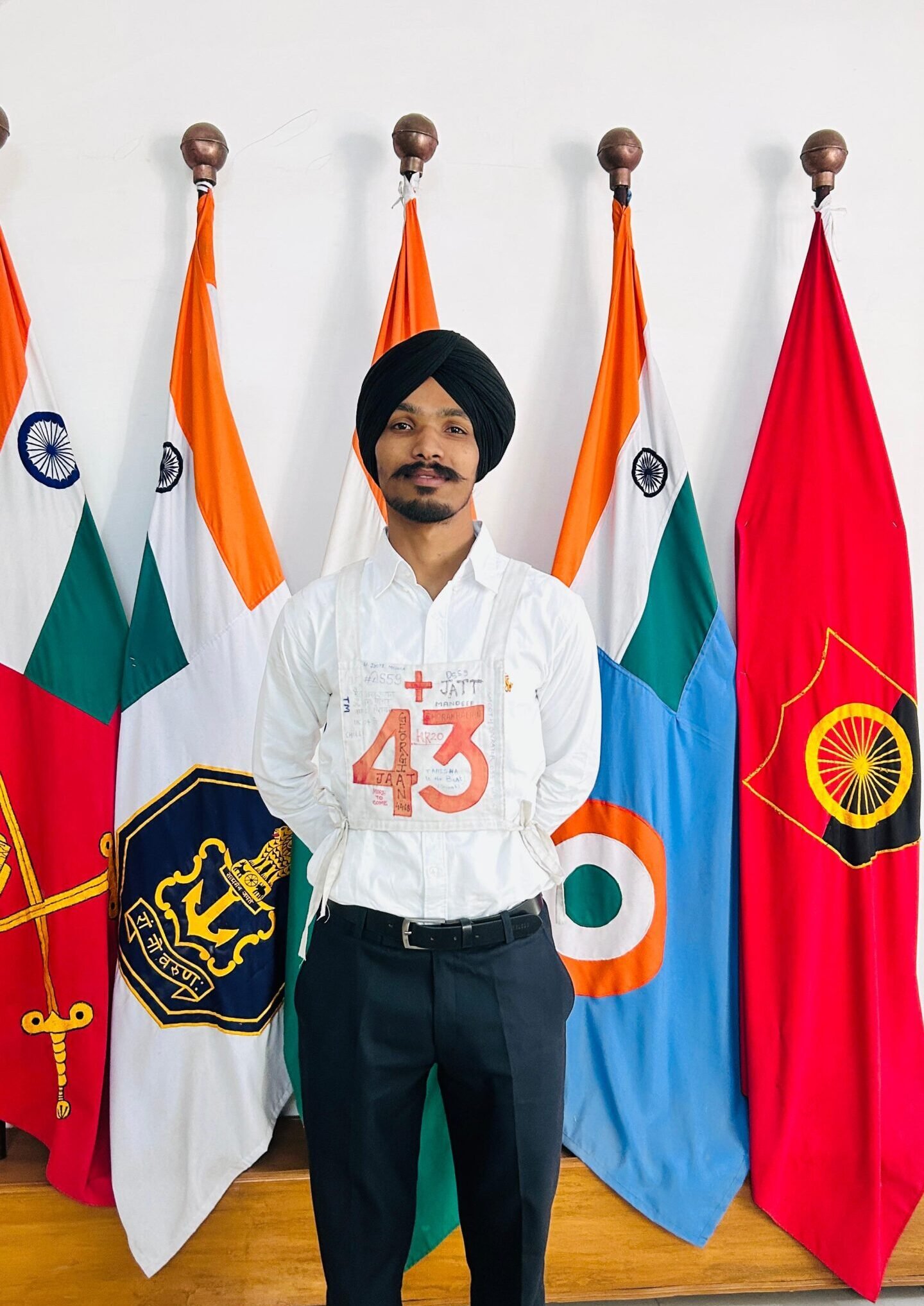
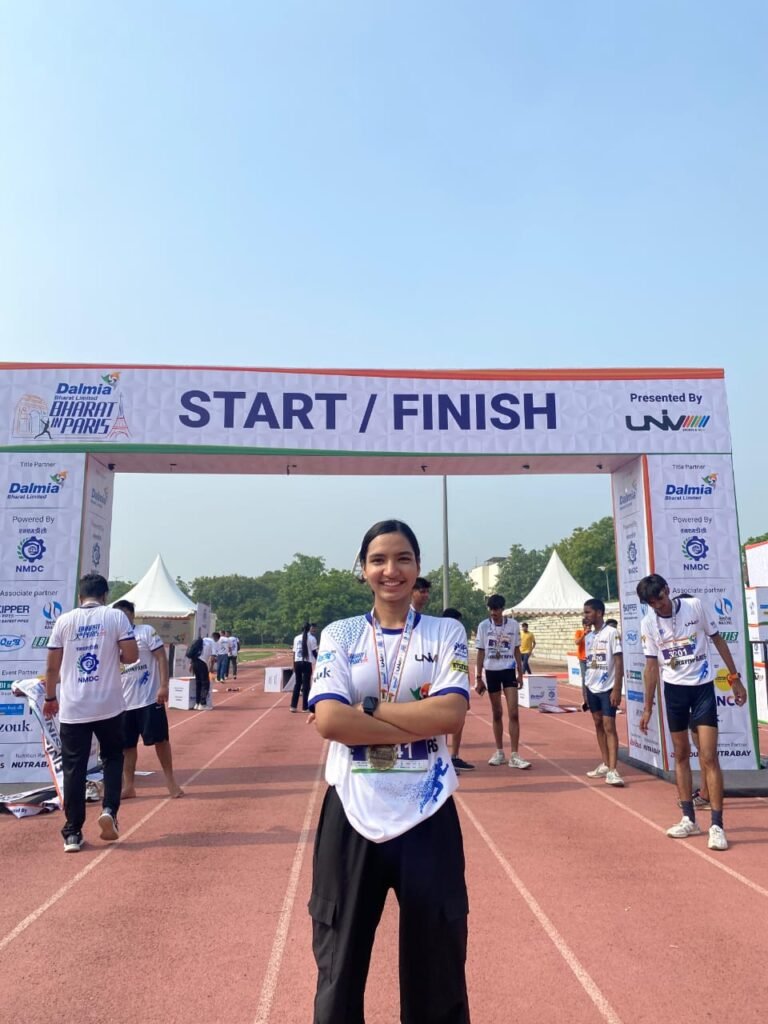
In a small town in Haryana, Mehak grew up listening to stories of service, sacrifice, and honour. For her, joining the Armed Forces was never just a career option. It was a legacy. She belongs to the third generation in her family to aspire for the uniform.
The dream wasn’t imposed on her — it inspired her. Watching the pride with which her family spoke about service made one thing clear from the start: She wanted to carry that honour forward. After completing her schooling in Haryana, Mehak graduated from the prestigious Miranda House under University of Delhi — a phase that quietly transformed her personality in ways she didn’t initially realize.
“Legacy Is Not Inherited, It Is Earned.”
The Reality Behind the Dream
Like many aspirants, her journey wasn’t smooth.
Five attempts.
Yes, this was her 5th SSB attempt,cleared through AFCAT 2025.
But the earlier attempts were filled with self-doubt and internal battles.
Coming from a rural background in Haryana, she initially struggled with communication during her NDA attempts. She felt underconfident while expressing herself. She knew she had potential,but expression was becoming her barrier.
Instead of accepting it as a limitation, she decided to work on it.
After getting into DU, she joined NCC. She interacted with officers. She exposed herself to better conversations. She observed, learned, and gradually built confidence not artificially, but organically.
The Psychology Shift That Changed Everything
One of her biggest realizations came during preparation.
In her earlier attempts, especially in the Psychology tests, something was missing : depth.
Her stories were technically correct but emotionally flat.
When she joined the R2R Psych Batch (something she heard about through word of mouth), she discovered something important:
The assessors are not evaluating perfect stories.
They are evaluating personality.
With structured mentoring, she learned:
- How to add genuine emotions to TAT stories
- How to make responses meaningful rather than mechanical
- How to approach SRT with clarity instead of panic
- How to reflect her real personality instead of an “ideal candidate” version
The shift was subtle but powerful.
Instead of writing what she thought the board wanted to hear, she started writing what truly represented her thinking.
The Most Challenging Part: Group Tasks
For Mehak, PGT (Progressive Group Task) was the most challenging.
Not because she lacked ideas but because she initially struggled with group coordination.
Through preparation and feedback, she learned:
- How to guide a group without dominating
- How to contribute without interrupting
- How to present ideas clearly and confidently
- How to be a good team member, not just a vocal one
Interestingly, she found that spending time with group members during breaks — informal conversations, understanding personalities — made coordination during tasks much smoother.
It wasn’t about leading loudly.
It was about leading wisely.
What Made the 5th Attempt Different?
This time, she wasn’t trying to “act like an officer.”
She was trying to be herself confidently.
She had worked on:
- Communication
- Emotional depth
- Self-awareness
- Exposure
- Group coordination
Most importantly, she had worked on her personality not just SSB techniques.
And that’s what reflected during assessment.
The result?
Recommendation.
Her Message to Aspirants
“Don’t fake a personality just to clear SSB. It rarely works. Be true to who you are. Improve yourself, but don’t create a fake version thinking it will make the process easier.”
Mehak’s story isn’t about instant success.
It’s about consistency, self-improvement, right guidance and authenticity.
If you’re preparing for your next attempt, maybe ask yourself:
Are you preparing to impress…
or preparing to improve?Because when improvement becomes the focus recommendation becomes a by-product.