Entry: CDS OTA 1 2026
Selection Board: 11 SSB
Total Attempts: 7
Key takeaway: Repeated screen-outs are not the end of the road. Sometimes, the biggest obstacle is not your ability but the misconceptions you carry about yourself and the SSB process.
When Repeated Screen-Outs Make You Question Yourself
For many SSB aspirants, getting screened out once is disappointing. Getting screened out repeatedly can be even more difficult. With every unsuccessful attempt, questions begin to surface: Am I preparing the right way? Is there something wrong with my approach? Will I ever make it through?
Ankit Dhaka knows what this feels like.
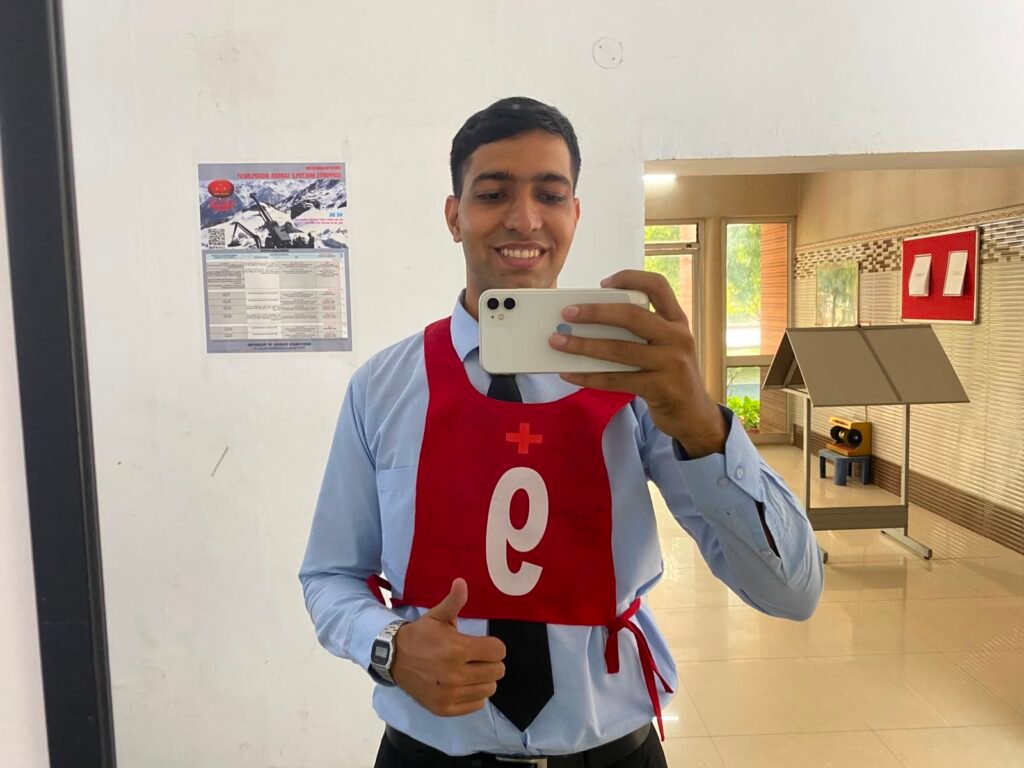
Ankit was recommended in his seventh SSB attempt for CDS 1 2026 (OTA) at 11 SSB. Before reaching this milestone, he had experienced repeated setbacks, including five consecutive screen-outs.
His journey is a reminder that an SSB setback does not necessarily define your potential. What matters is whether you understand why things are not working and make the effort to address those gaps.
Looking back at his journey, Ankit identified one major issue that had affected his preparation: misconceptions about himself and the SSB process.
The Misconceptions That Were Holding Him Back
Before seeking guidance from Road to Recommendation (R2R), Ankit had developed certain assumptions about what he should and should not do during the SSB process.
These assumptions influenced both his preparation and the way he approached the interview.
Like many aspirants, he had concerns about how certain aspects of his personality, experiences, and background might be perceived by the interviewing officer. He was inclined to be cautious about what he disclosed, rather than confidently presenting his experiences and allowing the officer to understand him.
However, he gradually began to recognise that preparing for SSB is not about hiding every perceived weakness or trying to construct an ideal personality. It is about understanding yourself, being able to explain your decisions, and demonstrating the ability to learn from your experiences.
This change in perspective became an important part of his preparation.
How R2R Helped Him Rethink His Preparation
Ankit credits R2R with helping him address the misconceptions that had influenced his earlier attempts.
One important part of this process was introspection. Ankit completed his 3 years degree in 4 years due to a back year. Along with that, he chose masters in english literature which his friends suggested to hide in interview. However, Instead of looking at his background and experiences only through the lens of what might go wrong in an interview, he began examining the reasons behind his choices.
For instance, Ankit had been involved in freelancing and teaching-related activities, including work connected with an NGO. He had also developed an interest in reading fiction and English literature.
Rather than automatically treating these experiences as potential negatives, he began reflecting on why he had pursued them, what he had learnt, and how they fitted into his broader journey.
This distinction matters for every aspirant.
An activity does not become a weakness simply because it is unconventional or different from what you think an officer might expect. What matters is whether you understand your own decisions and can discuss them honestly.
With guidance from Rahul Sir, Ankit also worked on developing greater confidence in his decisions. He began recognising that he did not need to approach every part of his background defensively.
The lesson is simple: do not prepare excuses for your life. Understand your life well enough to explain it.
The Interview: Why Introspection Matters More Than Memorised Answers
One of the most useful lessons from Ankit’s journey concerns interview preparation.
Initially, he was particularly focused on getting screened in and handling the interview without feeling nervous. His preparation for the GTO and Psychology tests was comparatively limited.
During his interview preparation, he had several concerns about how to discuss different aspects of his background. He was also conscious of the possibility of follow-up questions.
However, through introspection, he started examining the reasons behind his choices rather than simply worrying about how to present them.
Consider his interest in English literature. Instead of treating it as an arbitrary choice, he reflected on how his interest in fictional books had developed and how he had approached his studies.
This is the kind of clarity that can help an aspirant handle questions more naturally. When you understand why you made a decision, you are better placed to explain it and respond to follow-up questions without relying on a memorised script.
Ankit’s experience offers three practical lessons for interview preparation:
- Know your own story. Be familiar with your educational background, interests, activities, achievements, responsibilities, and decisions.
- Understand the reasons behind your choices. Do not stop at knowing what you did. Reflect on why you did it and what you learnt.
- Do not hide behind prepared answers. Preparation should help you express yourself clearly, not make you sound rehearsed or defensive.
The goal is not to eliminate every weakness from your story. It is to develop enough self-awareness to discuss your experiences honestly and confidently.
Screening Out Repeatedly: How Do You Deal With Self-Doubt?
One of the most relatable parts of Ankit’s journey is the uncertainty he experienced after repeated screen-outs.
Initially, he tried to make sense of each unsuccessful attempt by examining his performance. If he felt that he had not performed well, he could attribute the result to that particular performance and move forward.
But repeated setbacks naturally made him question whether his preparation was sufficient.
At one point, even before an upcoming attempt, he expressed his doubts to Rahul Sir. He was unsure whether things would work out this time.
This is an important moment in his story because it reflects something many aspirants experience but rarely discuss openly: you can continue preparing while simultaneously doubting yourself.
The answer is not to force yourself to feel confident all the time. Nor is it to assume that every setback means you are incapable.
Instead, look at each attempt objectively.
Ask yourself:
- Was my preparation balanced across screening, Psychology, GTO, and the interview?
- Did I understand the requirements of the tasks, or was I following assumptions I had picked up elsewhere?
- What did I learn from my previous performance?
- What specific change can I make before my next attempt?
Ankit’s experience illustrates the importance of reviewing your preparation rather than allowing your previous results to become a judgement of your abilities.
Self-doubt becomes more manageable when you replace vague fears with specific questions you can work on.
What Changed Between His Earlier Attempts and His Recommendation?
Ankit’s recommendation did not come from discovering a magic answer or eliminating every uncertainty from his preparation.
A significant part of his progress came from reassessing the assumptions he had carried into earlier attempts.
He learnt from his previous experiences, reconsidered the way he viewed his own background, and worked on becoming more confident in his decisions. His journey also reinforced the importance of recognising gaps in preparation rather than concentrating exclusively on screening and the interview.
His seventh attempt at 11 SSB ultimately resulted in a recommendation for CDS OTA 1 2026.
While every aspirant’s circumstances are different, his experience demonstrates why repeated attempts should be accompanied by reflection and learning. Simply appearing for another SSB without examining your earlier approach may leave the same problems unaddressed.
The more useful question is not merely, “How many attempts have I given?” but “What have I understood about myself through those attempts?”
What SSB Aspirants Can Learn From Ankit Dhaka’s Journey
Ankit’s journey offers several practical takeaways for aspirants preparing for their first SSB or trying to recover from repeated setbacks.
1. Do not let screen-outs define your potential.
A screen-out is an outcome from a particular attempt. Review your performance, identify possible gaps, and use that information to guide your next preparation cycle.
2. Challenge your misconceptions.
Advice from friends, coaching centres, and other aspirants can influence your approach. Do not accept every claim uncritically. Understand the process and examine whether your assumptions are helping or hindering you.
3. Practise introspection, not just question preparation.
Knowing a list of common interview questions is useful, but it is not enough. Understand your own decisions, motivations, responsibilities, interests, and experiences.
4. Be honest about your background.
Do not automatically treat freelancing, unconventional interests, academic difficulties, or other life experiences as things you must hide. Understand them, acknowledge what you learnt, and explain them truthfully.
5. Prepare for the entire SSB process.
Screening deserves attention, but do not neglect Psychology, GTO, or the interview while preparing for it. Build a balanced approach suited to your needs.
6. Learn something from every attempt.
Experience becomes useful when you reflect on it. Identify what went well, what did not, and what you can do differently rather than merely counting the attempts.