One of the most common mistakes SSB aspirants make is believing they need to become someone else to get recommended.
They try to speak differently.
Act differently.
Think differently.
They build a version of themselves that they believe the assessors want to see.
But SSB has a way of seeing through that.
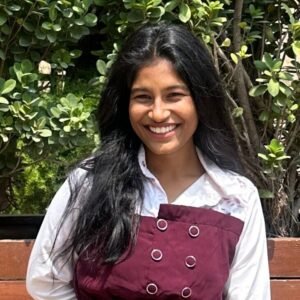
For Mehak, the breakthrough came when she stopped trying to fit a mould and started embracing who she truly was.
A Legacy She Wanted to Carry Forward
Born and raised in Haryana, Mehak grew up in an environment where service to the nation was more than just a profession, it was a family tradition.
She belongs to the third generation of her family pursuing a career in the Armed Forces. For her, joining the military wasn’t simply about securing a job or achieving personal success. It was about continuing a legacy of honour that had inspired her throughout her life.
This sense of purpose stayed with her from childhood and became the driving force behind her preparation journey.
After completing her schooling in Haryana, she earned admission to the prestigious Miranda House, a milestone that would eventually play a significant role in shaping her personality and confidence.
When Effort Isn’t Translating Into Results
Like many aspirants, Mehak was working hard.
But despite her efforts, something wasn’t clicking.
One area that particularly held her back was the Psychology tests.
She had the experiences.
She had the intentions.
But her stories often lacked emotional depth and personal connection.
As a result, her responses didn’t fully reflect her personality.
She also found the Situation Reaction Test (SRT) challenging. While she could think of solutions, she often struggled with the approach and structure needed to express them effectively under time pressure.
After hearing about R2R through recommendations from other aspirants, she decided to join the Psychology batch.
And that became an important turning point.
Learning to Add Meaning, Not Just Answers
One of the biggest lessons Mehak learnt during her preparation was that psychology tests aren’t about writing perfect stories.
They’re about revealing how you think.
Through mentor feedback and structured guidance, she started understanding how to bring genuine emotions, depth, and realism into her responses.
Instead of writing mechanically, she learnt how to reflect her actual thought process and personality.
Similarly, her approach towards SRT evolved. With practice and guidance, she became more comfortable handling situations naturally and effectively.
The difference wasn’t that she started creating better answers.
The difference was that her answers started becoming more authentic.
The Transformation Beyond SSB Preparation
Interestingly, the biggest change in Mehak’s journey happened outside the SSB classroom.
Coming from a rural background in Haryana, she initially faced challenges with communication and confidence, particularly during her earlier NDA attempts.
She often felt that she lacked the exposure that many other candidates seemed to have.
But instead of accepting those limitations, she worked on them.
When she joined Miranda House under the University of Delhi, she actively sought opportunities to grow.
She joined NCC.
She interacted with officers.
She stepped outside her comfort zone.
She explored new environments and met people from different backgrounds.
With every experience, her confidence grew.
Gradually, the communication barriers that once felt intimidating started disappearing.
By the time she appeared for her successful AFCAT 2025 entry, she wasn’t trying to imitate confidence anymore.
She had built it.
The Toughest Challenge: Group Tasks
While many candidates struggle with interviews or psychology tests, Mehak found the Progressive Group Task (PGT) and other group activities particularly challenging.
For her, the difficulty wasn’t coming up with solutions.
It was understanding group dynamics.
How do you guide a group without dominating it?
How do you contribute effectively without speaking over others?
How do you ensure your ideas are heard while still being a team player?
Over time, she discovered a simple yet powerful solution.
She made an effort to interact with fellow candidates during breaks and informal moments throughout the SSB.
Those conversations helped build comfort and understanding within the group, making collaboration during tasks much more natural.
It taught her an important lesson: leadership isn’t always about leading from the front. Sometimes it’s about helping the group function better together.
Five Attempts Later
Success didn’t arrive immediately.
It came after five attempts.
Five opportunities to learn.
Five opportunities to improve.
Five opportunities to understand herself better.
And when recommendation finally came through AFCAT 2025, it wasn’t because she had created a perfect SSB personality.
It was because she had strengthened her real one.
Her Message to Aspirants
“Be true to yourself. Don’t create a fake personality just because you think it will help you clear the SSB. That rarely works. Instead, focus on improving yourself while staying true to your nature and personality.”
The Takeaway
Mehak’s journey highlights a truth that many aspirants overlook.
The goal of SSB preparation is not to become someone you’re not.
It’s to become a better version of who you already are.
Skills can be improved.
Communication can be developed.
Confidence can be built.
But authenticity cannot be faked for long.
Perhaps that’s why her story resonates with so many aspirants. It proves that background, language, or exposure may influence your starting point, but they do not determine your destination.
And when preparation is combined with self-awareness, growth, and the right guidance, success often follows.